
The New York Public Records Framework
New York treats agency records and court records under separate rules. That split is the first thing to grasp for any Queens County public records request. Agency records are handled by the Freedom of Information Law, known as FOIL. Court records follow Judiciary Law, court rules, case law, and sealing statutes. The two systems do not share one front door.
The state's open-government policy starts with a clear declaration. Public officers law section 84 says public accountability is central to open government. It sets the tone, but it does not by itself build a court-record portal.
Public Officers Law section 84 opens Article 6, the FOIL article. It frames why agencies must open their records to the public.
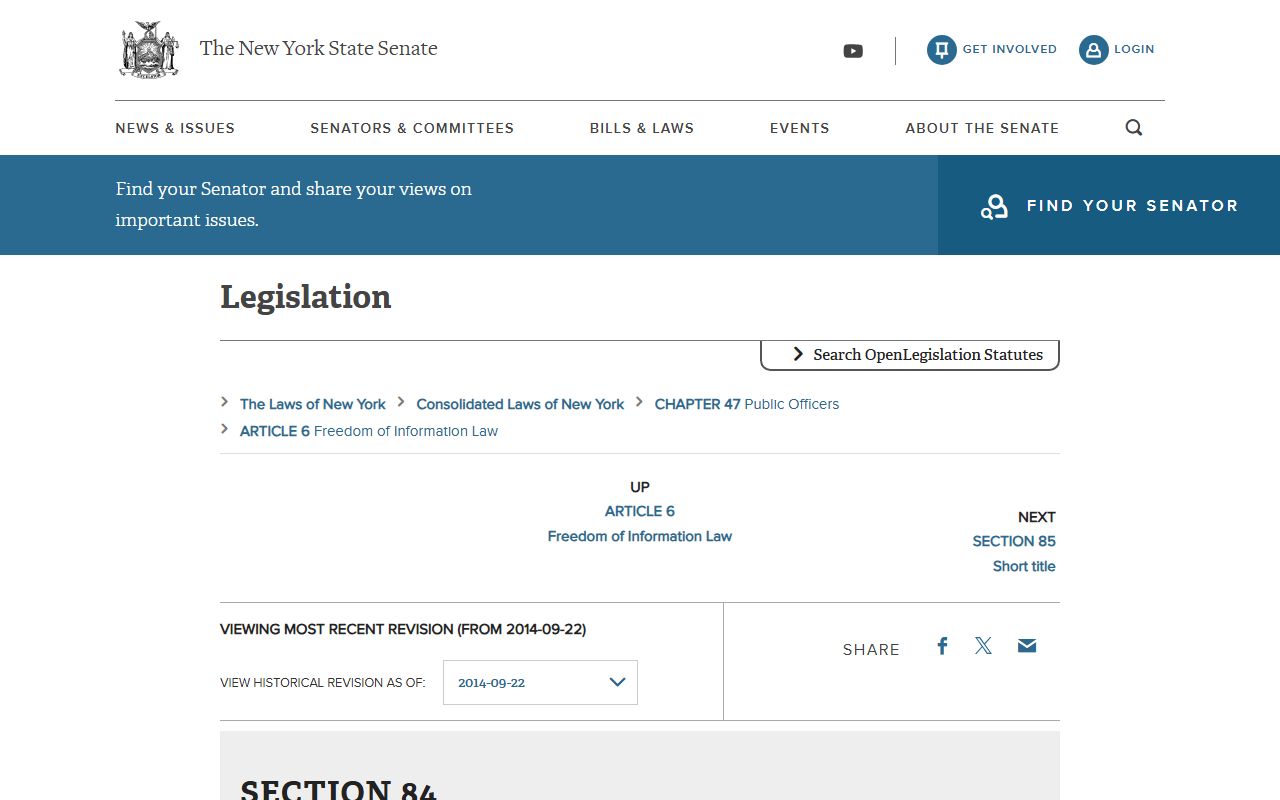
That declaration sits at the head of the law that governs Queens agency records. The full FOIL text lives in Public Officers Law Article 6. For court files, the controlling rule is different: Judiciary Law 255 directs the clerk to search files and certify the records the court holds.
Agency Records vs Court Records
People often ask for "public records" without knowing which kind they need. The answer changes the office, the law, and the cost. Arrest reports, jail logs, agency policies, and contracts are usually FOIL agency records. Pleadings, docket entries, judgments, and court orders are court records.
The comparison below lays out the two tracks side by side. Match your record to a column, then follow that path.
| Point | Agency Records (FOIL) | Court Records (Clerk) |
|---|---|---|
| Governed by | Public Officers Law Article 6 (FOIL) | Judiciary Law, court rules, sealing statutes |
| Examples | Arrest reports, jail logs, policies, agency data | Complaints, dockets, judgments, court orders |
| How to request | File a FOIL request with the agency | Search a court portal or ask the clerk |
| Fees | Copy and reproduction charges | Statutory search, copy, and certification fees |
City agencies hold the agency side in Queens. The NYC Department of Records keeps city archives and records, and the NYC Sheriff's Office handles civil enforcement and court support. Court files instead go through the clerks. For dockets and judgments, see the Queens County court records page.
Note: The Committee on Open Government gives FOIL advisory opinions for agencies, but it cannot order a court to release a sealed court file.
How to File a FOIL Request
FOIL is the path for agency records, not court files. The request goes to the agency that holds the record, such as a city department or a state agency. A good request describes the records clearly so staff can find them. Vague requests slow things down or draw a denial.
Use these steps to file a FOIL request in Queens:
- Pick the agency that holds the record, such as a city or state office, not a court clerk.
- Write a request that reasonably describes the records, with dates, names, or a topic.
- Send it to the agency's records access officer by the method the agency accepts.
- Watch for the agency response within about five business days.
- If denied, file an administrative appeal, then consider an Article 78 case in Supreme Court.
For guidance on what FOIL covers and how agencies should respond, the Committee on Open Government publishes plain explanations. An agency may deny records under exemptions for law enforcement, privacy, internal deliberation, trade secrets, or safety. It can release the rest with the exempt parts redacted.
FOIL Timelines and Appeals
FOIL sets a clock on agency responses. An agency generally must respond within five business days. It can do one of three things: make the record available, deny the request in writing, or acknowledge the request and give an approximate date for its answer. That window applies to city and state agencies, not to a walk-in for a certified court copy.
If an agency denies access, fails to respond, or drags out an unreasonable delay, you have a route to push back. First comes an administrative appeal to the agency's FOIL appeals officer. After an adverse decision or a constructive denial, you can bring an Article 78 proceeding in Supreme Court. That is a special court case used to review agency action.
The appeal path is built into the law on purpose. It gives a check on agency denials without forcing every dispute straight into a lawsuit. Keep copies of your request, the agency response, and your appeal, since dates and records matter if the case reaches court.
Records Beyond the Courts
Not every public record is a court file. Many sit with the county clerk or with city agencies. The Queens County Clerk, as Clerk of the Supreme Court Civil Branch, keeps civil court files, judgments, name changes, and matrimonial indexes. Land-related filings also reach the county clerk record.
City agencies hold a wide range of records on the FOIL side. These are the offices a Queens searcher meets most often beyond the courts:
- NYC Department of Records - city archives, historical records, and municipal files.
- NYC Sheriff's Office - civil enforcement, evictions, and court-support functions.
- NYC Department of Correction - jail logs, custody data, and facility information.
- NYPD - arrest reports, incident data, and police records subject to FOIL exemptions.
- State agencies - records held by state offices under the same FOIL rules.
For estate filings, the Surrogate's Court keeps wills and administration records, and the Queens County Clerk holds the Supreme civil side. Marriage records are a city function, handled by the City Clerk rather than the county clerk.
Restricted and Sealed Queens Records
Open access is the rule, but it gives way to specific laws. New York uses sealing more than expungement. A sealed record is closed to the public, though law enforcement or named agencies may still see it. Several statutes set these limits, and they apply on both the court and agency sides.
A dismissed criminal case may seal automatically after a favorable end under CPL 160.50. Family Court files are restricted under Family Court Act 166. Divorce pleadings and papers are limited by Domestic Relations Law 235. Youthful offender cases, adoption files, and grand jury minutes are also closed by law.
Civil court records can be sealed too, but only on a showing of good cause under court rule 22 NYCRR 216.1. Broad embarrassment is usually not enough. To view a restricted file, you generally must be a party, an attorney, or an agency named in the statute. An empty search result can mean a case is sealed, not that it never existed. For criminal record access, the arrest records page covers sealing in more depth.
Fees and Certified Copies
Cost depends on which track the record sits on. FOIL agencies generally charge for copies and reproduction. Electronic records may cost less when the agency can pull them easily. Courts charge statutory or schedule-based fees for searches, certifications, exemplifications, transcripts, and copies. Exact Queens amounts are set by statute, rule, or local schedule, so confirm before you pay.
| Service | How It Is Priced |
|---|---|
| FOIL agency copies | Copy and reproduction charges set by the agency. |
| FOIL electronic records | May cost less when readily retrievable. |
| Court record search | Statutory or clerk schedule; confirm with the clerk. |
| Certified court copy | Set by statute and clerk schedule; confirm with the clerk. |
| Exemplified court copy | Higher than a plain copy; confirm with the clerk. |
A certified copy is different from a free online screenshot. A screenshot or downloaded PDF reads fine, but it is not an official record. For court matters used with another agency, you usually need a certified copy from the clerk who holds the file. The Queens County Clerk page explains the certified-copy steps for civil records.
Note: Court transcripts come from the court reporter or transcription unit, and a docket line showing a hearing does not mean a transcript is already on file.
Public Record Search
Sponsored Results