
What the Queens County Clerk Does
New York does not use a Texas-style district clerk. For Supreme Court civil files in Queens, the equivalent office is the Queens County Clerk. The Clerk also acts as Clerk of the Supreme Court, Civil Branch. That dual role is the key fact. It means one office keeps the official civil court file and the broader county clerk record at the same building on Sutphin Boulevard.
The office handles court-file custody for Supreme Court civil matters. It records judgments. It issues certain certifications. It maintains filings that become part of the county clerk record, such as liens and matrimonial indexes. It also works with NYSCEF for e-filed Supreme Court cases. A person looking for a civil suit, a foreclosure file, a judgment, a name change, or a county clerk certification will usually start here.
Land-related filings and other documents that the law sends to the county clerk also live in this office. Because the Clerk wears two hats, the same counter that handles a court file can also handle a clerk-level filing. That is unusual, and it trips up readers who expect a single statewide records desk.
Records the Queens County Clerk Holds
The County Clerk does not hold every Queens court record. It holds the Supreme Court civil side and the county clerk filings tied to it. Knowing the line saves a wasted trip. Most criminal, family, housing, and estate records belong to other clerks.
These are the main record groups kept by the Queens County Clerk:
- Supreme Court civil files - summonses, complaints, motions, orders, and judgments in civil actions.
- Matrimonial indexes - divorce case index data, with access limited under Domestic Relations Law 235.
- Money judgments and liens - judgment records and county clerk filings against property or parties.
- Name change records - civil name change petitions and orders.
- Certifications - certified and exemplified copies of records the office holds.
- NYSCEF civil dockets - e-filed Supreme Court civil cases and their public documents.
Each item above lives in the civil branch. A criminal docket, a custody file, or a will does not. For those, you go to the chief clerk of that court, covered on the Chief Clerk offices page.
Which Clerk Holds Which Queens Record
New York splits clerk duties across courts. The County Clerk is one of several record offices in the borough. The table maps a record type to the clerk or office that keeps it. Use it before you call or visit, since the wrong desk cannot pull a file it does not hold.
| Record Type | Clerk / Office That Holds It |
|---|---|
| Supreme Court civil, matrimonial, judgments, name changes | Queens County Clerk / Supreme Court Civil |
| E-filed civil documents | Queens County Clerk via NYSCEF |
| Misdemeanors, arraignments, criminal appearances | Queens Criminal Court clerk, Kew Gardens |
| Indicted felonies | Supreme Court Criminal Term clerk, Kew Gardens |
| Small claims, housing, lower civil | Queens Civil Court clerk, Sutphin Boulevard |
| Custody, support, family offense | Queens Family Court clerk, Jamaica Avenue |
| Wills, estates, guardianship | Queens Surrogate's Court clerk |
You can read more about the criminal, family, and civil clerks on the Chief Clerk offices page. Estate files run through the Surrogate's Court, and the trial court itself is covered on the Queens Supreme Court page.
Note: The County Clerk keeps the Supreme civil side only, so a criminal, family, housing, or estate request must go to that court's own clerk instead.
Queens County Clerk Office
The County Clerk shares the Supreme Court Civil Term courthouse in Jamaica. The Jamaica transit hub sits close by, so subway, bus, and Long Island Rail Road riders can reach it without much trouble. Plan for security screening at the door, and confirm clerk window hours before you go, since the counter can close earlier than the building.
Queens County Clerk / Supreme Court Civil Term
88-11 Sutphin Boulevard
Jamaica, NY 11435
Civil case files, judgments, name changes, certifications
Bring a clear case reference when you arrive. The exact court name, the index number, the party names as filed, and the filing year will speed up any pull. Older paper files may be archived, so retrieval can take time rather than happen at the window.
How to Request a Certified Copy
A certified copy is an official record the clerk stamps and signs. It is not the same as a free screenshot from a portal. Courts and agencies that need proof of a record will ask for the certified version. State law sets the clerk's duty to search the file and certify what the office holds.
Under Judiciary Law 255, the clerk must search the records in custody and certify a copy when the law allows. That statute is the backbone of every certified court-copy request in New York.
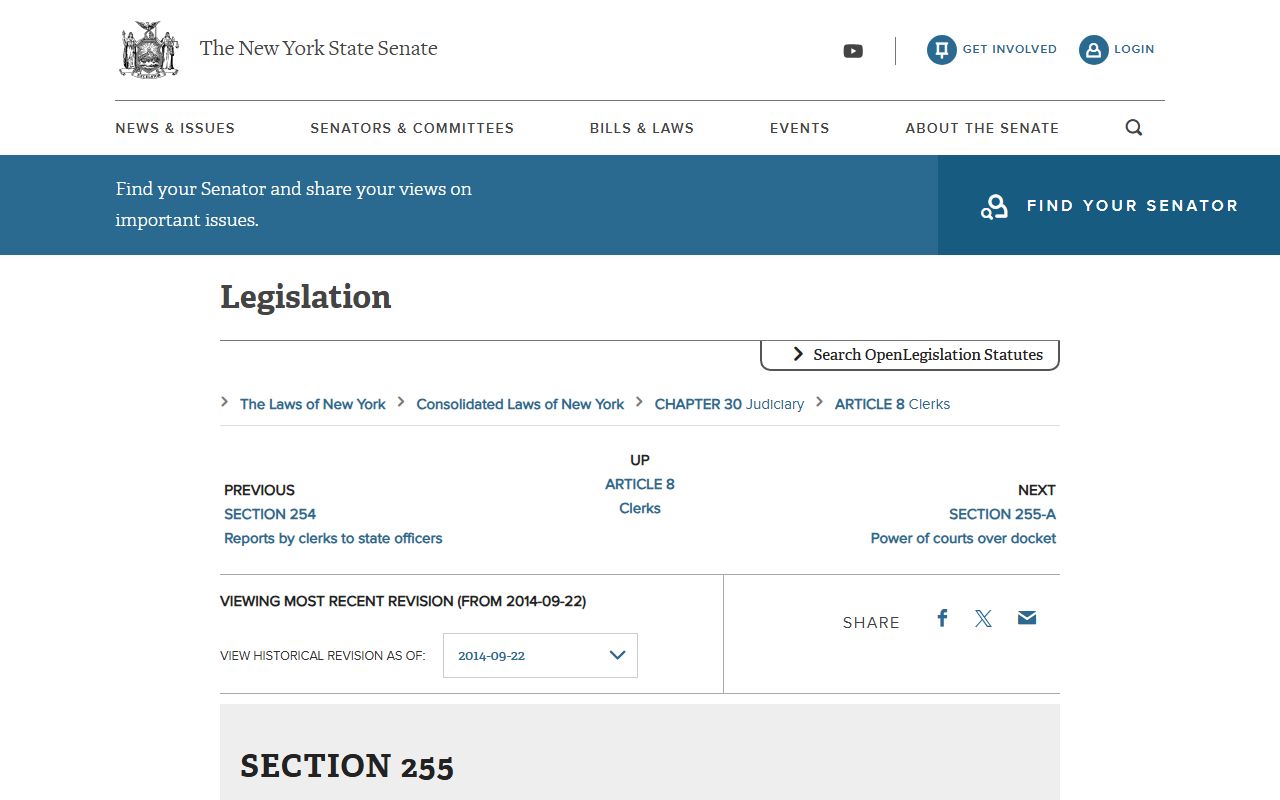
The statute sits in the Judiciary Law and applies to the Queens County Clerk in the clerk's role over Supreme Court civil files. To get a copy, follow these steps:
- Confirm the County Clerk holds the file. Supreme civil, matrimonial, judgment, and name change records belong here.
- Gather the case caption, index number, filing year, and the exact document title you want.
- Decide the copy type. A plain copy reads fine, but a certified or exemplified copy is needed for official use.
- Submit the request at the clerk window or by the method the office accepts, and pay the clerk's fee.
- Allow extra time for archived or older paper files, which may not be pulled the same day.
For a record used outside New York, ask whether exemplification or apostille steps are needed after certification. A restricted file, such as a matrimonial or sealed record, may require proof that you are a party, an attorney, or an authorized agency.
Queens County Clerk Fees
New York court fees are set by statute, court rules, and local clerk fee schedules. Exact Queens amounts are not always posted on the public pages, so confirm the current charge with the clerk before you submit. The table lists the common services and how each is priced.
| Service | Fee |
|---|---|
| Supreme Court civil record search | Set by statute and clerk fee schedule; confirm with the clerk. |
| Certified copy of a court document | Set by statute and clerk fee schedule; confirm with the clerk. |
| Exemplified copy | Higher than a plain copy; confirm the schedule with the clerk. |
| NYSCEF document access | Free to search; document access depends on filing status and role. |
| Divorce record copy | Access restricted by DRL 235; fee confirmed with the clerk. |
A certified copy costs more than a plain copy, and an exemplified copy costs more still. Pay only the published or quoted clerk fee, and ask for a receipt. Fees can change, so the schedule at the window controls what you owe.
Note: A PDF downloaded from NYSCEF may be fine for reading, but it is not a certified copy and may not be accepted when you file with another agency.
Online Tools for Queens Civil Records
Two state tools cover most Supreme Court civil work in Queens. WebCivil Supreme is the eCourts case search for civil cases. NYSCEF is the electronic filing and document system. The County Clerk works with both, so you can often check a case online before you ever contact the office.
WebCivil Supreme is best for an index number or party name lookup. It shows the case data and docket entries. NYSCEF is the better tool when you want the actual e-filed documents in a case. Search by index number first, since a common party name returns many hits across the state.
| Tool | Field | Required | Notes |
|---|---|---|---|
| WebCivil Supreme | County | Likely yes | Select Queens. |
| WebCivil Supreme | Index Number | Optional | Best exact search. |
| WebCivil Supreme | Party Name | Optional | Last or business name. |
| NYSCEF | Search as Guest | Optional | Public search, no login. |
| NYSCEF | Index Number | Optional | Exact e-filed case lookup. |
Open WebCivil Supreme to run a civil search by Queens County and index number. Use NYSCEF when you need the filed documents. For background on reading what a search returns, the Queens County court records page breaks down each docket field.
Forms and Filing Help
Most civil court forms come from the statewide court forms library, not a single Queens form. The library covers civil, matrimonial, name change, and small claims forms. There is no universal County Clerk record-request form, so a request usually means you give the case details at the window or by the accepted method.
The statewide court forms library holds the documents you may need to file or to support a request. For self-help on civil and matrimonial matters, CourtHelp walks pro se filers through common steps. Both come from the state court system and are free to use.
When you ask any clerk for a record, give a full set of details rather than a vague "find my case." Provide the court name, the index number, the party names as filed, the filing year, and the document title. For restricted files, expect to show party status, attorney authorization, agency authority, or a court order.
Public Record Search
Sponsored Results