
Where Queens Marriage Records Come From
This is the part that trips up most people. Marriage licenses in Queens are not issued by the Queens County Clerk. They come from the Office of the City Clerk of New York City. One office serves all five boroughs, Queens included. So a couple in Astoria, Flushing, or Jamaica uses the same city system as a couple in Manhattan. Do not go to the county clerk for a license. You will be sent back to the city.
The City Clerk runs the application and the records side. New York City uses an appointment and online workflow known as Project Cupid. Couples fill out the application, give identity details, pay the City Clerk fee, and book a time. The license then follows New York's waiting-period and validity rules. Certified marriage records are requested from the same City Clerk office, not from a court. That holds true for recent records and, with different access rules, for older genealogy records.
You can start a Queens marriage license application on the NYC City Clerk marriage license page, which walks couples through the Project Cupid steps.
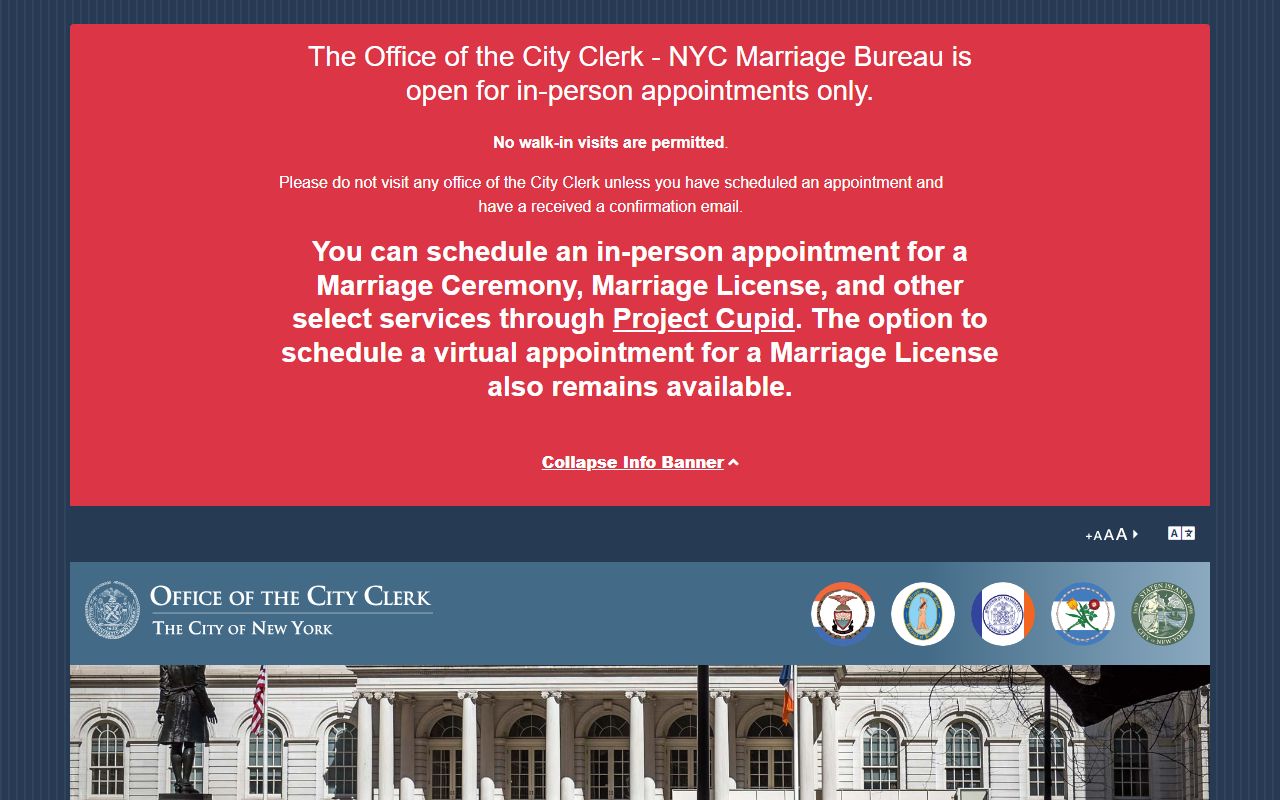
The city page lays out who can apply, what ID to bring, and how the appointment flow works for Queens couples. It is the official front door for the whole process.
Queens Marriage License Application Fields
The application asks both people for the same core facts. Most of it is identity and eligibility. If either person was married before, the form asks how that marriage ended. Knowing the fields ahead of time makes the appointment go fast.
| Field | Required | Notes / Format |
|---|---|---|
| Applicant A name | Yes | Legal name. |
| Applicant B name | Yes | Legal name. |
| Date of birth | Yes | Identity and age check. |
| Address | Yes | Residence and mailing details. |
| Identification | Yes | Government photo ID. |
| Prior marriage information | If applies | Divorce, death, or annulment details. |
| Appointment selection | Yes | Project Cupid / City Clerk calendar. |
| Payment | Yes | City Clerk fee; confirm current amount. |
Have a clear photo ID ready for each person. If a prior marriage ended, bring proof of how it ended. The city may ask for it before the license is issued.
How to Apply for a Marriage License
The steps are simple once you know the order. The license and the ceremony are two separate things. You get the license first. The ceremony comes later, and there is a wait in between.
- Start the application online through the City Clerk's Project Cupid system.
- Enter both applicants' names, dates of birth, addresses, and prior marriage details.
- Pick an appointment time at a City Clerk office.
- Pay the City Clerk fee; confirm the current amount on the official page.
- Bring government photo ID to the appointment to finish and pick up the license.
- Wait out New York's required period before the ceremony, and marry within the license validity window.
- Have an authorized officiant perform the ceremony and return the license for recording.
Note: A marriage is not complete just because the license was issued; the ceremony and the officiant's return of the license are separate, required steps.
Requesting Queens County Marriage Records
A license is the document you get before the wedding. A marriage record is the proof that the marriage happened and was registered. The City Clerk holds both for Queens. Spouses can request a certified marriage record. Others may request one only if the law lets them. Older historical records follow different access rules than recent ones, and genealogy requests are handled on their own track.
A certified copy is the version that courts, agencies, and foreign governments accept. A free screenshot or an uncertified printout will not do for legal use. Plan for a fee and some processing time. The amount is set by the City Clerk fee schedule, so confirm the current cost before you pay.
You can request a certified copy on the NYC City Clerk marriage records page, which explains who is eligible and what each request needs.
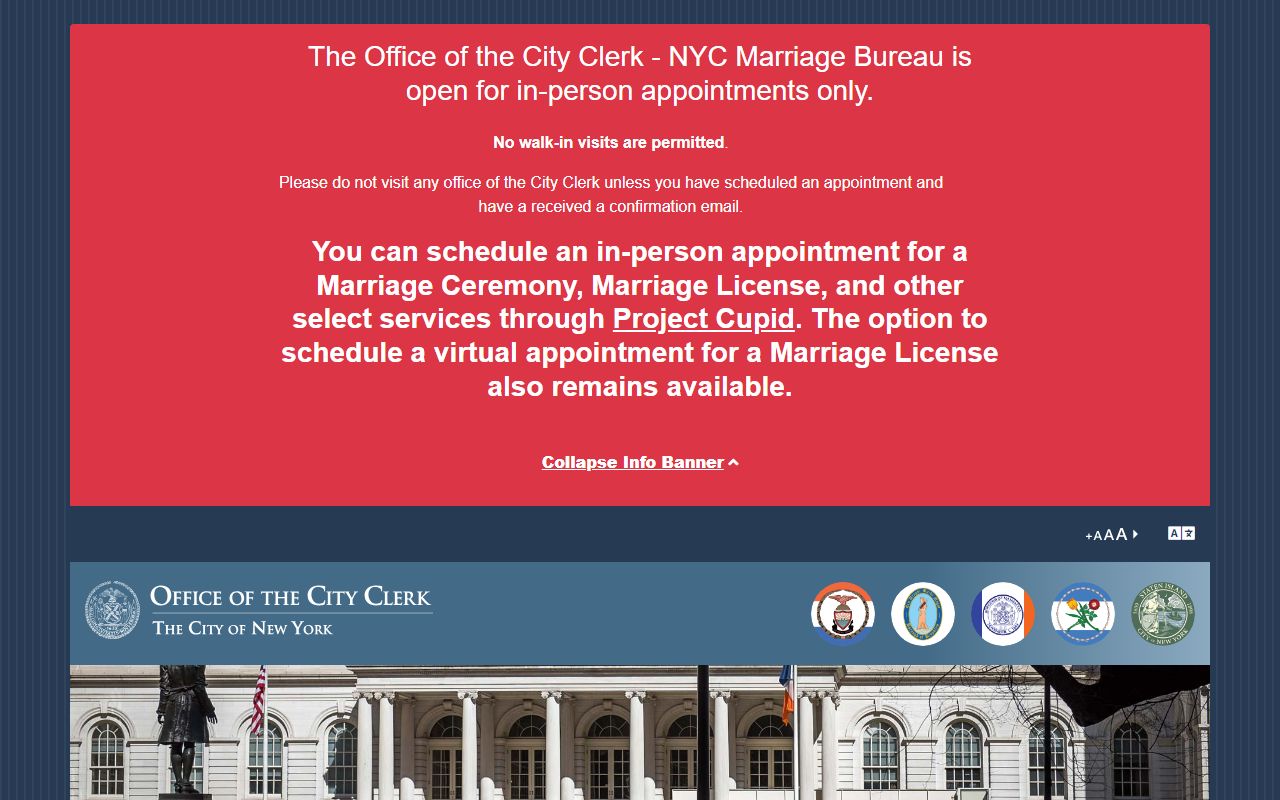
The records page is the official starting point for Queens couples who need a certified marriage record by mail or in person.
Marriage Record Fees
Several parts of the marriage process carry a fee. The license has one. A certified record copy has another. The City Clerk sets each amount, and the city can change them. The table groups the common items so you know what to expect, but it does not list dollar figures, since those must be confirmed on the official page.
| Item | Amount |
|---|---|
| Marriage license | Set by City Clerk fee schedule; confirm current amount. |
| Civil ceremony at the City Clerk | Set by City Clerk fee schedule; confirm current amount. |
| Certified marriage record copy | Set by City Clerk fee schedule; confirm current amount. |
| Domestic partnership registration | Set by City Clerk fee schedule; confirm current amount. |
Fees can be paid through the City Clerk's accepted methods. Always check the live page before you pay, since the office can update the schedule.
Queens County Divorce Records and Filing
Divorce is a court matter, not a city office matter. In Queens, a divorce is a Supreme Court case. That is the trial court for civil suits in New York, despite the name. Family Court cannot grant a divorce. Family Court can decide support, custody, visitation, and family offense cases, but only the Supreme Court can end a marriage. So a person who needs the marriage dissolved files in Supreme Court, while a person who only needs support or custody may use Family Court instead.
New York allows no-fault divorce. The ground is that the relationship has broken down without repair for at least six months. Fault grounds still exist in the law but are used less often. Residency rules must be met before a case can be filed. The judgment still has to resolve money and parenting issues, even when both spouses agree. Uncontested packets are available from the state courts. A contested divorce runs through the ordinary steps of a Supreme Court lawsuit.
You can file through Queens Supreme Court and the Queens County Clerk, often using NYSCEF for e-filing. General divorce questions are answered on the state's divorce FAQ page.
How to File a Queens Divorce
The path depends on whether the case is agreed or fought. An uncontested divorce uses a set packet and ends with a judgment package. A contested one moves through service, conferences, and sometimes trial. The core order of steps is the same at the start.
- Confirm you meet the residency rule and have a valid ground.
- Prepare the summons, complaint or summons with notice, and verified pleadings.
- Add settlement papers, child-support worksheets if there are children, and a fee-waiver form if needed.
- File with Queens Supreme Court and the County Clerk, often through NYSCEF.
- Serve your spouse under New York's service rules.
- File proof of service and the required affidavits.
- Submit the judgment package for an uncontested case, or proceed to conferences and trial if contested.
- Request a certified judgment from the clerk when you are allowed to.
Statewide forms sit in the NY Courts forms library, and self-help support is on CourtHelp. Both are free to use.
What a Queens Divorce Record Contains
A divorce file is built from a set of pleading fields. Once a case is filed, it gets an index number. The pleadings name both spouses, the date and place of the marriage, and whether there are children under 21. The grounds field controls the rest of the case. Knowing these fields helps you read a file or judge whether a search hit is the right one.
| Field | What It Shows |
|---|---|
| Index Number | The Supreme Court matrimonial case ID. |
| Plaintiff Spouse | The spouse who filed. |
| Defendant Spouse | The other spouse. |
| Date and Place of Marriage | Pleading facts about the marriage. |
| Children Under 21 | Controls which child forms are required. |
| Grounds | No-fault, statutory fault, or conversion. |
| Judgment Package | Affidavits, findings, and the final judgment. |
Ancillary relief can also show up: maintenance, equitable distribution, custody, child support, and counsel fees. A settlement agreement is attached when the spouses resolved the issues by agreement.
Restricted Divorce Records in Queens
Divorce files are not as open as ordinary civil cases. Domestic Relations Law 235 limits who can inspect matrimonial pleadings and papers. That means a stranger cannot just pull a divorce file the way they might pull a foreclosure docket. Access to the judgment or certificate is narrower too. The rule protects family privacy.
A third party who wants a matrimonial file usually needs a court order or some other authorization the law allows. Being curious is not enough. The clerk will check whether you fit a category the statute permits. You can read the statute on the New York Senate page for DRL 235. An empty search result can mean the file is restricted, not that the divorce never happened.
Note: Under DRL 235, third parties generally need a court order or statutory authorization to inspect Queens divorce pleadings, so plan for that step.
Name Change After Marriage or Divorce
Many people change a name when they marry or divorce. A marriage license can support a name change for a spouse. A divorce judgment can restore a former name when the case asks for it. In some situations a separate court order is needed. The document you use depends on your facts.
Once you have the right record, you update other agencies. That usually means the DMV, the Social Security Administration, and the passport office. Each one wants its own proof. A certified marriage record or a certified divorce judgment is the kind of proof they accept. Keep a few certified copies on hand, since several offices may ask for one at the same time.
Public Record Search
Sponsored Results